Diamonds
Diamonds, best known of the world’s gemstones, have fascinated potentates and collectors since their discovery near Golconda, India around 800 B.C. Austria’s Archduke Maximilian began a tradition in 1477 now considered integral to diamonds’ financial success. To symbolize his love for Mary of Burgundy, the duke was first to incorporate a diamond into a wedding ring. That use makes diamonds the most expected and purchased of all major gemstones. Seldom do accolades coincide with reality, but diamonds deserve all the superlatives showered on them. These gorgeous jewels, the crystal form of carbon, rate a 10 on the Mohs hardness scale of 1 to 10 as the hardest material in nature. Diamonds will scratch anything else, including other diamonds. And with an outstandingly high refractive index of 2.41, diamonds dazzle with rainbow hues. To a gemologist, a material must have three qualities to be classified as a gem: beauty, durability, and rarity. Clearly diamonds qualify.
Formed between 70 and 140 miles beneath the earth’s surface, diamonds arrive on the earth’s surface, where they can be found by humans, by a unique delivery system. They must be forced through the earth’s crust within a volcano. The diamonds we are finding today were actually formed 900 million to 3 1/2 billion years ago! Diamonds forming beneath our feet today will remain unseen for billions of years.
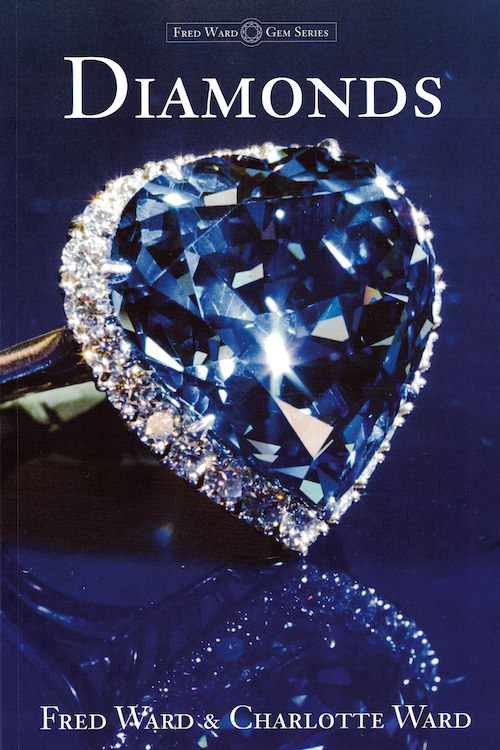
India was the diamond source for most of our history with gems. The most famous diamond, the Hope (top), is a great 45.52-carat blue from India now on display at the Smithsonian Institution in Washington, DC (as is the colored diamond array below the Hope). It now belongs to the American people. Diamonds occur in all colors, with red the rarest and most expensive.
Diamonds have the most organized gem trade, due to tight control by De Beers, the British and South African company that markets about 60 percent of the world’s uncut diamonds. As explained in our new diamond book, diamonds are mined in a number of countries, with Australia, Botswana, and Russia producing most. South Africa remains important, as are Namibia, Angola, and now Canada. Diamond cutting is concentrated due to De Beers’ tight distribution system of uncut (or “rough”) stones. India cuts more diamonds than any other country, mostly smaller sizes. Other major cutting centers are in Israel, Belgium, and the U.S. Increasing in importance are China, Thailand, and Russia. As a result of the “Diamonds Are Forever” campaign, romantics and investors buy almost all the gem-quality diamonds found annually. Most of the more than 100 million carats of diamonds mined each year are industrial-quality, required in prodigious amounts by modern societies to cut, grind, and polish almost every product we use: metals, optics, glass, molds, stone, ceramics, drill bits, dental drills, and millions more.
Diamond jewelry remains the dominant gem product sold in the USA and Europe. As explained in Mr. Ward’s book, for most of the history of diamond use, the gems were reserved for royalty, celebrities such as Elizabeth Taylor, and the very wealthy. But the phenomenal South African discoveries in the late 1800s produced so many diamonds suddenly that suppliers needed a new marketing plan. De Beers consolidated control and developed a broad buyer base. The twentieth century’s marketing revolution made diamonds (and other fine gems) available to everyone. For the first time in history, anyone with a job could afford a gem. And from the beginning of this change, the gems most people wanted were diamonds. Mr. Ward specializes in gem searches for discriminating clients. With extensive contacts around the world, he can locate unusual, exotic, and beautiful gemstones to fulfill your dreams.
The 64-page all-color Diamonds book is US$14.95, plus $3.00 shipping and handling.